
The magnetic performance of an eddy current separator directly determines its overall performance. Separators with high surface magnetic flux density deliver superior sorting efficiency compared to those with weaker surface magnetic fields. So how should buyers test the magnetic force of an eddy current separator when purchasing one? How to carry out magnetic testing on eddy current separators? How to measure magnetic flux density levels? Based on years of manufacturing experience, our company has summarized the following key points:
Professional gaussmeters are required to test the magnetic force of eddy current separators. Test results shall be subject to readings from gaussmeters calibrated by official manufacturers. Low-cost gaussmeters purchased online or uncalibrated units will produce inaccurate measurement data.
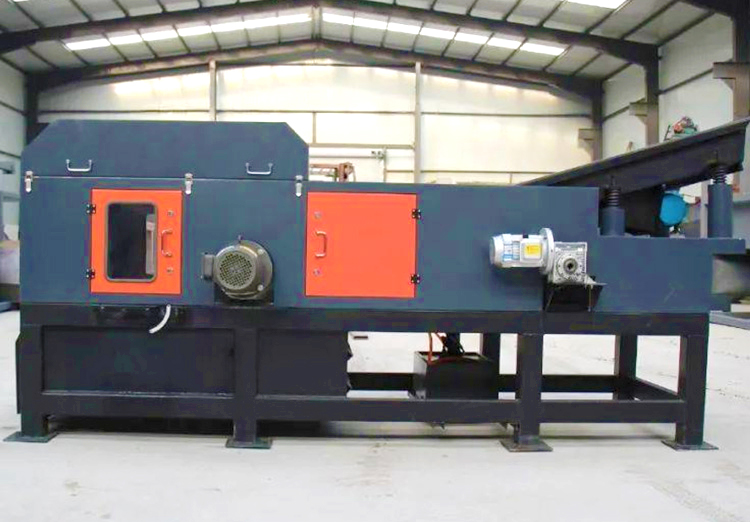
Before testing, confirm the thickness of the shell cover on the eddy current magnetic rotor and the conveyor belt. Magnetic force attenuates with varying thickness of spacer materials (thicker materials lead to greater attenuation). Then use the gaussmeter to conduct tests on the conveyor belt surface and record the maximum and minimum magnetic readings.
Customers with suitable conditions can test the bare magnetic rotor surface after the rotor is assembled by the manufacturer. Normally, rotors assembled with NdFeB strong magnets can achieve a surface magnetic flux density of 11,000–12,000 Gs.
Without a gaussmeter, an iron bar can be used for spot inspection to check full magnetization. For incompletely magnetized rotors, the magnetic field at the magnet wedge positions will be obviously weak, which can be sensed manually.
The most practical magnetic testing method for eddy current separators is to run small materials of 2–5 mm for sorting trials. Separators that can effectively sort 2–5 mm fine materials normally feature high magnetic flux density and favorable magnetic penetration depth.
Notes
For equipment with a rotor diameter of 275 mm, the magnetic flux density drops to roughly 2,000–2,500 Gs after attenuation across a 10 mm distance. For 325 mm diameter units, the surface magnetic flux density on the conveyor belt falls to approximately 3,000–3,500 Gs after 10 mm attenuation.
Avoid relying solely on the gaussmeter provided by equipment manufacturers, as some suppliers may calibrate their meters to display inflated magnetic readings for misleading purposes.
Some manufacturers, especially new entrants in the past two years, thin the shell cover and conveyor belt down to 3 mm to boost apparent sorting performance. Under such conditions, 325 mm diameter machines can reach around 4,000 Gs on the belt surface. Many manufacturers specially modify test machines with thinner shell covers and belts to achieve better demonstration sorting results. However, machines equipped with fewer magnets or overly thin liners/belts suffer severe wear in actual operation and have a very short service life.